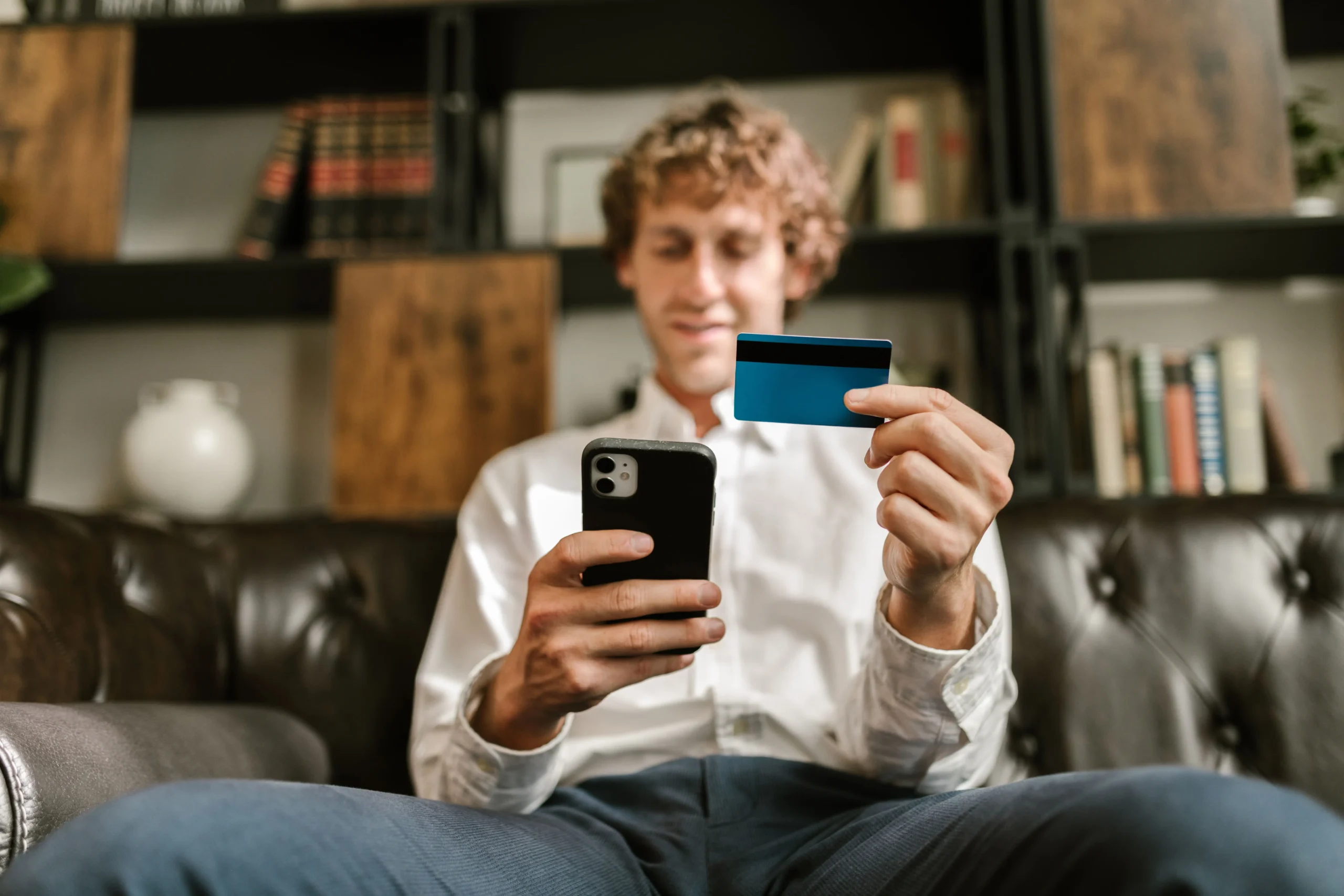
Money can disappear from your account without ever leaving your hand. That strange feeling is becoming harder to ignore. Tap a phone at a checkout counter, wait for a tiny confirmation sound, and the transaction is finished. There is no wallet getting thinner, no coins shifting inside a pocket, and no stack of bills reminding you that you just spent something valuable. The payment feels almost weightless. Yet your bank balance has changed just the same.
From my perspective, this is one of the most interesting psychological side effects of modern banking. Mobile payments have made transactions faster, safer in many situations, and remarkably convenient. But convenience can also change how we emotionally experience spending. When money becomes nothing more than a number on a screen, the mental barrier between “I want this” and “I am spending money on this” can become much weaker.
Physical Money Gives Spending a Tangible Feeling
Cash has a physical presence that digital money does not. When you hand someone a banknote, you can see it leave your possession. If you have several notes in your wallet, spending one creates a visible difference. Even a small purchase can produce a subtle sense of loss because the transaction is physically obvious.
That physical feedback matters more than many people realize. In behavioral economics, spending can create what researchers often describe as the “pain of paying.” The idea is simple: parting with money can produce a psychological reaction, and the strength of that reaction can influence how carefully we spend. Cash makes that process difficult to ignore because the payment is right in front of us.
Digital payments remove much of that friction. There is no physical exchange to slow the moment down. A phone can simply move toward a terminal, a fingerprint can authorize the transaction, and the process is over before the brain has much time to reflect on it.
I have noticed that this distinction becomes particularly obvious when comparing a cash purchase with a mobile payment of the same amount. The financial value is identical. The emotional experience is not.
Smartphones Turn Money into Information
A smartphone is already a device for handling information, communication, entertainment, and work. Adding money to that environment changes the way we perceive it. Instead of thinking about money as something tangible, we increasingly interact with it as data.
Your bank balance might show $500 before a purchase and $465 afterward. Nothing physically moved in front of you. There was no envelope being opened or wallet becoming thinner. You simply saw one number change into another.
That abstraction can make money feel less real because numbers are easy to mentally separate from the things they represent. A person may understand perfectly well that $35 is real money, yet the act of tapping a screen does not necessarily trigger the same emotional response as handing over $35 in cash.
This is one reason mobile banking interfaces deserve more attention than they sometimes receive. A well-designed app does more than display balances. It shapes how customers understand their financial lives. When spending appears as a stream of small digital transactions, the psychological experience can become very different from managing physical cash.
The Speed of Mobile Payments Changes the Spending Experience
Speed is one of the biggest advantages of mobile payments. Nobody wants to stand in a checkout line while someone searches through a wallet for the correct change. A phone can make payment almost instantaneous. But speed has another consequence: it reduces the amount of time available for reflection.
Imagine buying something you did not originally plan to purchase. With cash, you may physically count the money, open your wallet, hand over the notes, and receive change. Those tiny steps create opportunities to reconsider the decision. A mobile payment compresses the same process into a few seconds.
That does not mean mobile payments automatically make people irresponsible. The technology itself is not the problem. The issue is that removing friction can remove some of the psychological cues that previously helped people recognize when they were spending.
In my experience observing how consumers interact with digital banking products, this is where convenience becomes a double-edged sword. The smoother a payment system becomes, the easier it is to focus entirely on the purchase and almost completely ignore the payment.
Small Purchases Can Become Surprisingly Easy to Ignore
A large purchase usually gets attention regardless of the payment method. Buying a laptop, booking an expensive trip, or paying a major household bill tends to trigger careful consideration. Small purchases are different.
A $3 coffee, $6 snack, or $10 digital purchase may not feel significant when viewed individually. Mobile payments can make these transactions particularly easy because they require almost no effort. The problem emerges when several small purchases accumulate throughout the week. Five dollars here. Eight dollars there. Another small payment tomorrow.
At the end of the month, the combined amount can be substantial even though none of the individual transactions felt important. This is where digital payment habits can quietly affect personal budgeting. The problem is not necessarily that people spend more on every transaction. It is that the emotional significance of each transaction can become weaker.
That distinction matters for banks and financial technology companies as well. Transaction history provides customers with valuable information, but customers still need to notice and interpret that information. A spending dashboard that simply lists dozens of transactions may not be enough. Good financial tools should help users recognize patterns, not merely record them.
Notifications Can Make Digital Money Feel Even More Abstract
Most mobile banking applications send payment notifications almost immediately after a transaction. These alerts are useful. They can help customers detect unauthorized payments, track purchases, and stay aware of account activity. Yet there is an interesting psychological contradiction.
A notification may tell you that money has been spent, but it often appears as just another piece of information on a screen. You swipe it away, return to another application, and continue with your day. The transaction becomes part of the endless stream of digital activity competing for your attention.
Compare that with the physical experience of opening a wallet and discovering that several banknotes are gone. The message is not just informational. It is visible.
This is why I believe financial applications should treat transaction feedback as more than a technical requirement. Clear categorization, spending summaries, budget alerts, and useful monthly comparisons can restore some of the awareness that physical money naturally provided.
Contactless Payments Remove Another Layer of Friction
Contactless payment technology has pushed convenience even further. In many places, consumers do not need to insert a card, enter a PIN for smaller purchases, or handle cash. A quick tap can complete the transaction.
From a banking perspective, that is impressive. From a psychological perspective, it is worth examining. Every removed step reduces friction. That is usually good for user experience. However, friction sometimes performs a useful behavioral function. It gives people a moment to pause.
When payment becomes almost invisible, consumers may become more focused on the outcome getting the coffee, food, ticket, or product rather than the financial exchange required to obtain it. The transaction becomes part of the background.
This is not an argument for bringing back inconvenient payment systems. Digital banking should continue improving. Instead, it is a reminder that financial technology should balance convenience with financial awareness.
Digital Wallets Can Blur the Difference Between Wants and Needs
Another factor is how easily mobile payments connect spending with everyday digital life. Shopping applications, food delivery platforms, subscription services, games, transportation apps, and online stores can all connect directly to a payment method. The distance between desire and purchase becomes incredibly short.
You see something. You tap. You authenticate. It is done. There is nothing inherently wrong with that process. In fact, reducing unnecessary payment friction can make everyday life significantly easier. But when every purchase becomes effortless, people need stronger internal systems for deciding what deserves their money.
That is where personal budgeting becomes important. A budget is not simply a restriction on spending. Done properly, it provides a framework that helps people decide where their money should go before temptation arrives.
For younger consumers especially, learning to recognize the difference between “I can afford this” and “this is worth buying” can be more valuable than simply learning how to use a payment application.
Seeing Your Balance Can Restore Financial Awareness
The good news is that digital money does not have to remain psychologically invisible. One of the simplest habits is to check your bank balance regularly. Not obsessively. Just consistently.
Reviewing recent transactions can reconnect spending with reality. Instead of remembering individual purchases emotionally, you can see the larger pattern. Perhaps you spent more on food delivery than expected. Maybe several subscriptions are quietly draining your account. Or perhaps your spending is actually under control and the anxiety was unnecessary.
Banking applications can make this process easier by offering categorized transactions, spending summaries, savings goals, and alerts. These features effectively replace some of the physical cues that disappeared when cash became digital.
I would argue that this is one of the most valuable directions for modern banking. The best financial technology should not merely help customers move money faster. It should help them understand money better.
The Problem Is Not Your Phone
It is tempting to blame smartphones for making spending feel less real. I do not think that is quite fair. A phone is simply the interface. The deeper issue is the psychological distance between an action and its financial consequence.
Mobile payments reduce that distance physically while sometimes increasing it mentally. The transaction happens instantly, but the emotional recognition of spending may arrive later perhaps when the account balance looks smaller than expected.
That is why responsible digital spending requires intentional habits. Before making a purchase, ask whether you genuinely want it. After several purchases, look at the total rather than judging each transaction separately. At the end of the month, review where your money actually went. These small practices can restore the awareness that cash once provided naturally.
Digital Money Is Real, Even When It Does Not Feel Real
The strange thing about digital money is that nothing about its financial value has changed. Ten dollars spent through a phone is still ten dollars. The bank records the transaction. Your available balance decreases. The merchant receives payment. What changes is the human experience surrounding the transaction.
Physical money gives spending a visible, tactile quality. Mobile payments replace that experience with speed, convenience, and abstraction. That transformation can be incredibly useful, but it also means consumers have to become more deliberate about noticing their spending.
From a banking perspective, I see this as less of a technology problem and more of a financial-awareness challenge. Banks and fintech companies can build better tools, but consumers also need to use those tools actively.
The next time you tap your phone and walk away from a checkout counter without giving the payment a second thought, take a moment to consider what just happened. The money may have felt invisible, but the financial decision was very real.
And perhaps that is the most important lesson, when money stops feeling tangible, awareness has to become intentional. How do you personally experience mobile payments do they make spending feel easier, or do you keep enough track of your transactions to notice every purchase?